

If you’re reading this, chances are you’re somewhere in the middle of the same question I hear almost every single day: do I really need to go abroad to get a degree that means something?
I’ve sat across the table from hundreds of students and parents wrestling with exactly this, especially over the last couple of years as visa timelines have gotten more unpredictable and study-abroad plans have gotten harder to pin down. And here’s the honest answer I keep giving: not always. Not anymore.
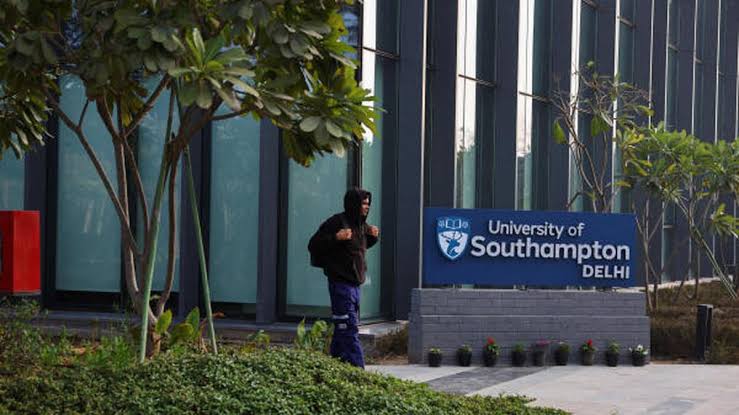
As of the September 2026 intake, 12 well-ranked universities from the UK, Australia and the USA are running full campuses right here in India — in Mumbai, Bengaluru, Gurugram, Delhi and GIFT City. Same degree. Same curriculum. Largely the same faculty. No student visa, no living-abroad loan, no flight ticket. And the cost is typically 50–70% lower than doing the same degree overseas.
Let me walk you through what’s actually on offer, what it costs, what it takes to get in, and how I’d think about it if you were sitting across from me.
What Exactly Are “Foreign Universities in India”?
Let’s clear this up first, because a lot of students come in confused about it.
These are genuine campuses — built and run by the foreign university itself, on Indian soil, under India’s UGC (Foreign Higher Educational Institutions) Regulations, 2023. This is not a tie-up. It’s not a franchise. It’s not an online-only degree with an India label stuck on it. It’s the same university, the same degree certificate, and largely the same syllabus a student would get by flying to London, Sydney or Chicago for it — except the classrooms, the labs and the faculty are here.
That’s a meaningfully different thing from the older “study in India” options — twinning programmes, credit-transfer arrangements, that sort of setup. A real foreign university campus has its own address, its own infrastructure, and its own accountability to the parent university’s standards.
Why I’m Seeing More Students Choose India Over Going Abroad
I want to be upfront — this isn’t right for everyone, and I’ll get to that. But here’s what’s genuinely drawing students toward this option lately, in my own conversations with them:
- A global degree at a cost that doesn’t require re-mortgaging the house. Tuition usually falls between ₹8–16 lakhs a year — a real 50–70% saving once you account for the living costs that come with actually relocating abroad.
- No watered-down version. The coursework and the final degree certificate are identical to what the home campus issues.
- One less thing to lose sleep over. No visa interview, no immigration paperwork, no waiting on an embassy timeline that’s become genuinely hard to predict.
- Scholarships that are worth applying for. I’ll say more on this below — some of these are genuinely attractive, and worth checking before you rule anything out on cost.
- Career support that isn’t an afterthought. Career fairs, internship assistance and employer engagement are built into how these campuses operate, not bolted on.
Here’s the honest caveat, though: a foreign university campus in India isn’t automatically the “better” choice than going abroad. If your career plan specifically depends on post-study work rights in a particular country, that’s a different conversation, and I’d tell you that directly rather than talk you out of it. But if what you actually want is a genuinely global degree without the cost and visa uncertainty of relocating, this is now a serious, credible option — not a fallback plan.
The 12 Foreign Universities Currently in India (September 2026)
Here’s the full list, as things stand right now.
University | QS Rank | Country | India Location |
The University of New South Wales (UNSW) | #19 | Australia | Bengaluru |
University of Bristol | #57 | UK | Mumbai |
University of Western Australia | #77 | Australia | Mumbai / Chennai |
University of Southampton | #111 | UK | Delhi |
University of Liverpool | #139 | UK | Bengaluru |
University of York | #158 | UK | Mumbai |
Queen’s University Belfast | #174 | UK | GIFT City |
University of Wollongong | #195 | Australia | GIFT City |
Deakin University | #227 | Australia | GIFT City |
University of Aberdeen | #288 | UK | Mumbai |
Illinois Institute of Technology | #591 | USA | Mumbai |
Victoria University | #696 | Australia | Gurugram |
Still open for the September 2026 intake: University of Western Australia, University of Liverpool, University of York, University of Bristol, Victoria University, University of Aberdeen, Illinois Institute of Technology, and University of Southampton. I’ll say this plainly — these windows don’t stay open long, so if one of these has caught your eye, don’t sit on it. Confirm the course-specific deadline before you plan around it.
What Can You Actually Study Here? Courses at Each Campus
The course mix leans hard into what employers are actually hiring for right now — computer science, AI, data science, business analytics, finance, cybersecurity — alongside solid business, economics and management degrees. Here’s the full breakdown, university by university, so you can see where your interests actually fit.
Queen’s University Belfast (GIFT City)
PG: MSc Business Analytics, MSc Finance, MSc Financial Analytics, MSc AI in Business, MSc Artificial Intelligence, MSc Construction & Project Management
University of Bristol (Mumbai)
UG: BSc Data Science, BSc Economics, BSc Economics & Data Science, MA Immersive Arts PG: MSc Finance & Investment, MSc Financial Technology with Data Science
Victoria University (Gurugram)
UG: Bachelor of Business, Bachelor of Cyber Security, Bachelor of Data Science, Bachelor of Information Technology PG: MBA (Global), Master of Information Technology
UNSW (Bengaluru)
UG: Bachelor of Business, Bachelor of Data Science & Decisions, BSc Computer Science PG: Master of Cyber Security
University of Liverpool (Bengaluru)
UG: BA (Hons) Business Management, BSc (Hons) Accounting & Finance, BSc (Hons) Biomedical Sciences, BSc (Hons) Computer Science, BSc (Hons) Computer Science with Software Development, BSc (Hons) Game Design
University of York (Mumbai)
UG: BA (Hons) Business & Management, BA (Hons) Business of Creative Industries, BSc (Hons) Computer Science, BSc (Hons) Computer Science with AI, BSc (Hons) Computer Science with Cyber Security, BSc (Hons) Economics PG: MSc Artificial Intelligence, MSc Finance, MSc Management
University of Western Australia (Mumbai / Chennai)
UG: Bachelor of Advanced Computer Science, Bachelor of Business (Business Management), Bachelor of Business (Enterprise & Innovation), Bachelor of Business (Global Business), Bachelor of Economics, BSc Computer Science, BSc Data Science PG: MBA, Master of Information Technology
University of Wollongong (GIFT City)
UG: BSc Business Analytics & Finance PG: Master of Computing (Data Analytics), Master of Computing (Applied AI), Master of Financial Technology (FinTech), Master of Financial Technology (FinTech) Extension, Graduate Certificate in Financial Technology, Graduate Certificate in Computing
University of Aberdeen (Mumbai)
UG: BSc (Hons) Computing Science, BSc (Hons) Data Science, MA (Hons) Business Management, MA (Hons) Economics PG: MSc Artificial Intelligence, MBA
University of Southampton (Delhi)
UG: BEng (Hons) Software Engineering, BSc (Hons) Accounting & Finance, BSc (Hons) Business Management, BSc (Hons) Computer Science, BSc (Hons) Creative Computing, BSc (Hons) Economics PG: MSc Data Science, MSc Economics, MSc Finance, MSc International Management
Illinois Institute of Technology (Mumbai)
UG: B.S. Artificial Intelligence, B.S. Business Administration, B.S. Business & Information Technology, B.S. Computer Science PG: M.S. Computer Science, Master of Artificial Intelligence, MBA, Master of Data Science
Deakin University (GIFT City)
UG: MSc (Hons) in Computer Science (listed as an undergraduate-track offering) PG: MS Business Analytics, MS Cyber Security (Professional), MSc (Hons) in Accounting and Finance
If your interest lies anywhere near data, AI, computing, finance or business, you genuinely have a wide field to choose from here — this isn’t a narrow, one-course setup.
What Does It Cost, and How Long Does It Take?
This is usually where I see students relax a little, once the numbers are actually on the table instead of imagined.
University (Location) | UG Fees/Year | PG Fees/Year | Duration |
Queen’s University Belfast — GIFT City | — | GBP 15,700 | PG: 12 months |
University of Bristol — Mumbai | ₹15,00,000 | ₹20–22 lakh | UG: 36 / PG: 12 months |
University of York — Mumbai | ₹12,50,000 | ₹15–16.5 lakh | UG: 36 / PG: 12 months |
University of Liverpool — Bengaluru | ₹11,50,000 | ₹15,00,000 | UG: 36 / PG: 12 months |
Illinois Institute of Technology — Mumbai | ₹16,00,000 | ₹20,00,000 | UG: 48 / PG: 24 months |
Victoria University — Gurugram | ₹11,00,000 | ₹13,50,000 | UG: 36 / PG: 24 months |
UNSW — Bengaluru | ₹14,93,280 | ₹19,91,040 | UG: 36 / PG: 12 months |
University of Aberdeen — Mumbai | ₹12,00,000 | ₹14–17 lakh | UG: 48 / PG: 12 months |
University of Western Australia — Mumbai/Chennai | ₹14.5–17.9 lakh | ₹19,25,000 | UG: 48 / PG: 24 months |
University of Southampton — Delhi | ₹13,86,000 | ₹16.2–23.1 lakh | UG: 36 / PG: 12 months |
Deakin University — GIFT City | — | AUD 19,800 | PG: 12 months |
University of Wollongong — GIFT City | AUD 19,125 | AUD 18,600 | UG: 48 / PG: 18 months |
And on the subject of cost — several of these universities also run genuinely attractive scholarships for eligible students, including some that can bring the tuition burden down substantially at campuses like Bristol, UWA and Southampton’s Delhi campus. I’d rather not throw numbers at you here, because scholarship terms shift by intake and depend heavily on your specific profile — but if cost is the thing standing between you and a university on this list, don’t rule it out before we’ve actually looked at what you might qualify for.
What Would You Realistically Need to Get In? Indicative Eligibility
This is the question I get asked right after fees, every single time. And I want to be straight with you: there’s no single cut-off that applies across all 12 of these campuses. It genuinely varies by university, by course, and sometimes by intake. What I can give you is a realistic, indicative picture of the kind of profile these campuses are generally looking for — enough to know roughly where you stand before we get into the specifics of your target course.
Undergraduate (UG) — Indicative
Criterion | What You’d Typically Need |
Academic record | Completed 12th / equivalent, generally somewhere in the ~60–75%+ range depending on the university and course (Computer Science and Data Science tracks tend to expect stronger Maths marks) |
English proficiency | IELTS ~6.0–6.5 overall, or equivalent — though several universities will also accept a Medium of Instruction (MOI) certificate or a strong XII English score in place of a test |
Subject background | A Maths/Science foundation is generally expected for Computer Science, Data Science and Engineering; an Economics/Business background helps for Business degrees, though it isn’t always mandatory |
Additional requirements | A Statement of Purpose (university-specific, not always required), Aadhaar/ID proof, and your academic transcripts |
Postgraduate (PG) — Indicative
Criterion | What You’d Typically Need |
Academic record | A relevant Bachelor’s degree, generally somewhere in the ~55–65%+ range or the equivalent grade point average |
English proficiency | IELTS ~6.0–6.5 overall, or equivalent — with an MOI or Bachelor’s-English-medium proof accepted by several universities in place of a test |
Work experience | Not mandatory for most Master’s programmes, but often preferred — and sometimes expected — for MBA and management courses |
Subject background | A quantitative or business-related Bachelor’s background is generally expected for MSc Finance, Data Science, AI and Business Analytics |
I want to be honest about the limits of this table: these are indicative bands based on how admissions to foreign university campuses in India typically work — not a published, university-verified cut-off list, and some universities also weigh your profile holistically or through an interview, not on marks alone. Please don’t build your entire plan around any single number here. Bring me your actual academic record and target course, and I’ll tell you exactly where you stand.
What You’ll Need to Have Ready When You Apply
For most applications, UG or PG, you’ll typically be asked for:
- Academic documents — 10th and 12th certificates/transcripts (or Bachelor’s transcripts and degree certificate for PG applicants)
- English proficiency proof — an MOI certificate or an English proficiency scorecard; your XII English score or Bachelor’s MOI may also be accepted
- Identity proof — Aadhaar card or another valid government ID
- Statement of Purpose (SOP) — university- and course-specific; not every university asks for one
- Updated CV — chronological, highlighting education, internships and relevant experience
- Work experience certificate — if applicable
The exact checklist shifts a bit by university, course and your own profile — worth confirming before you start pulling documents together.
Study in India or Study Abroad? Here’s How I’d Think About It
I get asked this constantly, and there’s genuinely no single right answer — but here’s the honest way I’d frame it if it were my decision.
Lean toward a foreign university campus in India if what matters most to you is the degree and the curriculum itself, if you want your costs to stay closer to Indian levels, if you’d rather sidestep visa-timeline uncertainty altogether, or if staying closer to family while still building a genuinely global profile matters to you.
Lean toward going abroad directly if your career plan specifically depends on post-study work rights or an immigration pathway in a particular country, if you want the full experience of actually living overseas, or if the course you want simply isn’t offered at any of these campuses yet.
Neither path is a downgrade from the other. They’re built for different priorities — the right call depends entirely on what you’re actually optimising for, and that’s exactly the kind of thing worth talking through properly before you decide.
Frequently Asked Questions
Is a foreign university campus in India degree the same as studying abroad? Yes, in terms of the degree certificate, curriculum and university branding — it’s issued by the same university. What differs is that you study on the India campus rather than the home campus abroad.
Do I need a student visa to study at a foreign university in India? No. Since you’re studying in India, there’s no student visa, immigration process or relocation required.
How much cheaper are foreign universities in India compared to studying abroad? Tuition at these campuses typically runs 50–70% lower than the cost of studying the equivalent degree at the university’s home campus abroad, before even accounting for living costs.
What is the eligibility for foreign university campuses in India? It varies by university and course, but as a general indication: UG applicants typically need a 12th-grade score in the ~60–75%+ range along with English proficiency proof, and PG applicants typically need a relevant Bachelor’s degree in the ~55–65%+ range, also with English proficiency proof. Always confirm the exact requirement for your specific course before applying.
Which cities in India have foreign university campuses? As of the September 2026 intake, campuses are operating in Mumbai, Bengaluru, Gurugram, Delhi and GIFT City (Gujarat).
Are scholarships available at foreign universities in India? Yes — several of these universities offer genuinely attractive scholarships for eligible students, with terms that vary by university, course and intake. Worth checking your eligibility rather than assuming cost rules a university out.
Can I still apply for the September 2026 intake? Several universities — including UWA, Liverpool, York, Bristol, Victoria University, Aberdeen, Illinois Tech and Southampton — were still accepting applications for the September 2026 intake at the time of writing, though this is a limited window and course-specific deadlines apply.
Let’s Actually Talk It Through
Here’s the thing — with 12 universities, 4 cities and dozens of courses now on the table, the hard question was never really “can I study in India for a global degree.” It’s “which of these actually fits my profile, my budget, and where I actually want to end up.” That’s a conversation, not a checklist, and it’s one I have with students directly — one-on-one, without handing you off partway through.
If you’re weighing a foreign university campus in India against going abroad, or just trying to work out which of these 12 universities genuinely makes sense for you, call or WhatsApp me directly at 9957756240. There’s no fee to talk it through — let’s just figure out what’s actually right for you.
.